
Future of Commercial Contract Cleaning Services
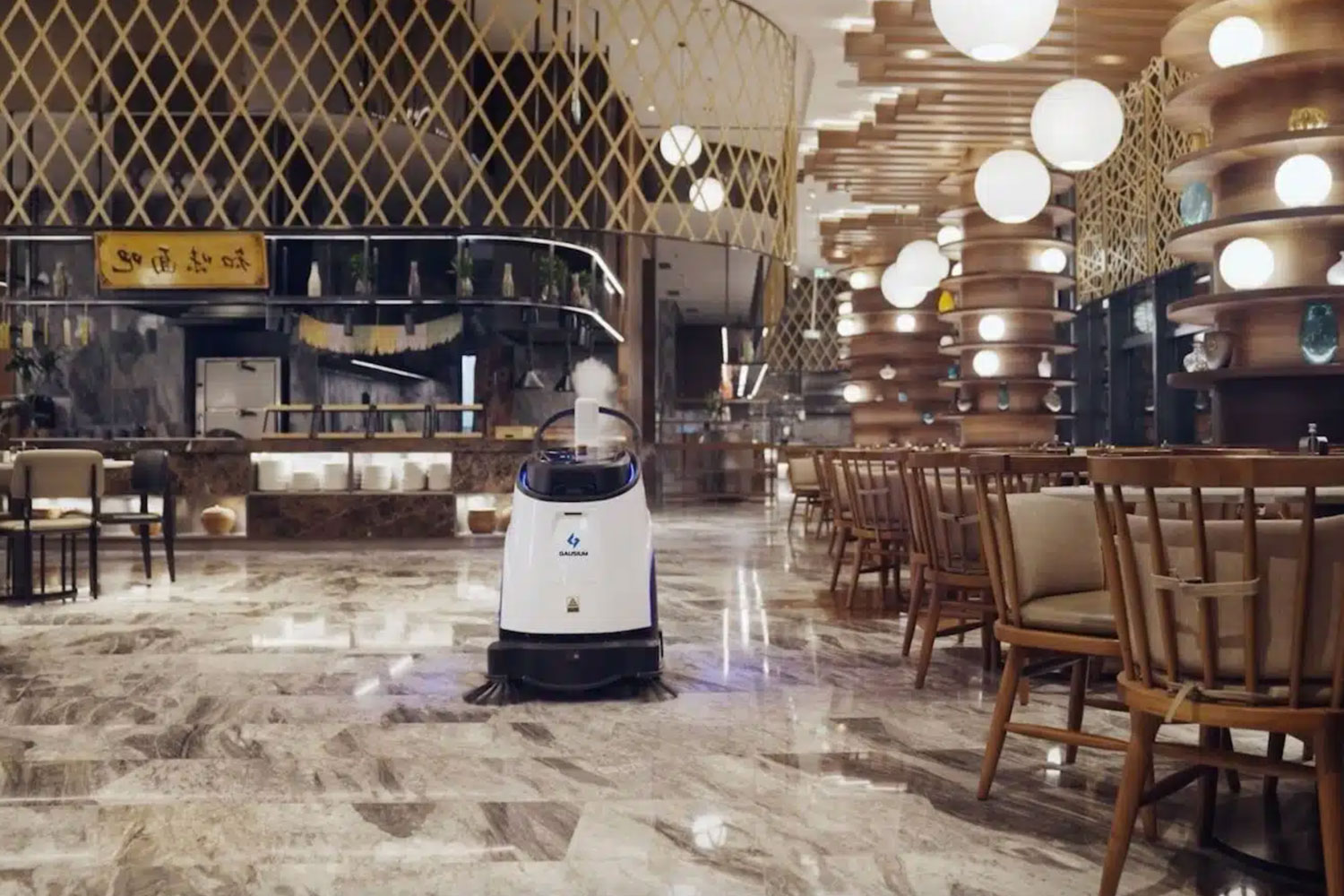
We came into the market with a promise to innovate, introducing the newest technologies from the best the world has to offer. We now introduce the latest range of cleaning robots used by businesses all over the world. This flagship range, offered by market leaders Gausium, covers robotic vacuum cleaners through to robotic floor scrubbers for every sized requirement. Equipped with the latest sensors and self-learning machine technology, these automated cleaning solutions are becoming an important addition to the contract cleaning services industry.
Efficiency and productivity
One of the primary advantages of cleaning robots is their ability to significantly enhance efficiency and productivity. Continuous operation enables commercial cleaning robots to cover large areas more quickly and thoroughly than manual labor. For instance, robotic vacuum cleaners from Gausium can systematically navigate through office spaces, retail areas and warehouses, ensuring that every corner is cleaned. This level of efficiency is particularly beneficial in environments that require frequent and extensive cleaning, such as warehouses and shopping centers.
Consistency and Quality
Consistency is a critical factor in maintaining high standards and cleaning robots excel in this area. Commercial cleaning robots, programmed with precise algorithms and equipped with advanced sensors, perform tasks with unwavering consistency. They follow predetermined cleaning paths and routines, ensuring that each cleaning session meets the same high standard. This level of consistency is crucial in industries where hygiene is paramount, such as healthcare and food service.
Addressing labour shortages
The cleaning industry often faces challenges related to labour shortages and high turnover rates. Recruiting and retaining skilled cleaning staff is difficult, especially in urban areas with high living costs. Industrial cleaning robots offer a viable solution to this problem by reducing the dependency on human labour. By taking over routine and repetitive tasks, these smart cleaning technologies free up human workers to focus on more complex and specialised cleaning duties. This not only alleviates the pressure of labour shortages but also allows cleaning companies to allocate their human resources more effectively.
Cost-Effectiveness
Cost savings are significant. Automated cleaning solutions reduce the need for a large cleaning staff, lowering payroll expenses and related costs such as benefits, training, and uniforms. Additionally, robots are less prone to errors and damage, leading to fewer costs associated with rework or repairs. Maintenance and operation costs for robots are relatively low, and the return on investment becomes evident as they continue to deliver consistent and reliable performance over time.
Enhancing safety and hygiene
In the wake of the Covid pandemic, the importance of maintaining high standards of hygiene has been underscored across all industries. Commercial cleaning robots play a vital role in enhancing safety and hygiene in commercial spaces. Equipped with advanced disinfection technologies such as UV-C light and electrostatic sprayers, robots effectively eliminate harmful pathogens from surfaces. Their ability to operate autonomously also reduces the risk of cross-contamination, as there is minimal human contact involved in the process. This is particularly important in environments where preventing the spread of infectious diseases is critical, such as hospitals, schools, and public transportation systems.
Sustainability and environmental impact
Sustainability is a growing concern in the commercial cleaning industry, with increasing emphasis on reducing environmental impact. Cleaning robots contribute to sustainability efforts in several ways. They are designed to use resources more efficiently, such as water and cleaning solutions, minimising waste. Robots are also energy-efficient, reducing the overall carbon footprint of cleaning operations. Additionally, the precision and consistency of robotic cleaning reduce the likelihood of overusing chemicals, which can be harmful to both the environment and human health. By adopting cleaning robots, companies align their operations with green initiatives and sustainability goals.
Innovation and future trends
The adoption of cleaning robots is just the beginning of a broader trend towards automation and smart technologies in commercial cleaning. Future developments are likely to see even more advanced robots. They will be able to adapt to changing environments, learn from their experiences, and optimise their performance over time. Integration with the Internet of Things (IoT) enables seamless communication between robots and other smart devices, creating a cohesive and efficient cleaning ecosystem. Just as robots for cutting grass and in-home robots for vacuuming and cleaning have become part of the normal fabric, so too will the latest generation of robotics for commercial cleaning.
Cleaning robots represent a transformative force in the commercial contract cleaning industry. Their ability to enhance efficiency, consistency, and quality, address labour shortages, and contribute to sustainability makes them an invaluable asset. As technology continues to advance, the role of cleaning robots will only grow, driving innovation and setting new standards for cleanliness and hygiene in commercial spaces. Embracing this technological shift is not just an option but a necessity for companies aiming to stay competitive and meet the evolving demands of the industry.